

Anemia is one of the most common complications during pregnancy, which has a detrimental impact on the course of pregnancy itself, childbirth, condition of the fetus, and later on the newborn’s health. In expectant mothers, the development of anemia is associated with an increased iron demand due to higher rate of fetus growth.
According to WHO 41.8% of pregnant women in the world suffer from anemia Postpartum anemia occurs in 25-50% of women* In the first trimester, this demand increases by 1 mg/day, in the second trimester - by 2 mg/day, and in the third trimester - from 3 to 5 mg/day. Therefore, by the third trimester of pregnancy, a woman demands an additional 300 to 500 mg of iron. So far, about 250-300 mg are spent for the fetus’ demands, 50-100 mg for the placenta construction, and about 50 mg is deposited in the myometrium. By the time of childbirth, there is a sharp decrease in the iron content in the blood serum, bone marrow and in the internal storehouse - the depot (the total iron loss in a woman is 1000–1200 mg).
It takes a woman 2 to 3 years to restore the iron loss during gestation and lactation*
According to the WHO, anemia is diagnosed when: hemoglobin concentration is less than 110 g / l in pregnant women (in the first and third trimesters) or less than 105 g / l (in the second trimester) If left unchecked, iron deficiency could lead to anemia with much more serious consequences. WHAT DOES IRON DEFICIENCY (ID) LEAD TO? Risks to mother and child: The risk of premature birth, development of chronic hypoxia, placental insufficiency and intrauterine growth retardation increases. Women in labor with ID are more likely to develop labor weakness, the risk of bleeding and severe anemia after childbirth increases. A characteristic sign of anemia in pregnant women is birth of immature children with low body weight. In the first years of life, ID leads to a lag in psychomotor and mental development of children, they develop a predisposition to diathesis, allergies, pneumonia, ARVI diseases, etc.
ALERTING SYMPTOMS:
facial skin pallor, weakness, dizziness, headaches (more often in evenings), shortness of breath with fast walking and exercise, palpitations, increased blood pressure, drowsiness during day and poor sleep at night, irritability, loss of appetite ... Iron deficiency could also cause such consequences: cracks in the corners of the lips, yellow palms, hair loss, fragility of nails, and sometimes strange desires - for example, to eat chalk.
ANEMIA?
WHO IS IN THE RISK GROUP? For the early detection of IDA development during gestation, a risk group of pregnant women who may develop ID has been identified. These include women with:menorrhagias were observed before pregnancy; multiple pregnancy; a small interval between pregnancies (the interval is less than 3 years); insufficient iron absorption due to chronic inflammatory bowel diseases, history of resection of the small intestine, intake of phosphates, antacids; insufficient intake of iron due to lifestyle (vegetarian diet), socio-economic factors (lack of a balanced and nutritious diet).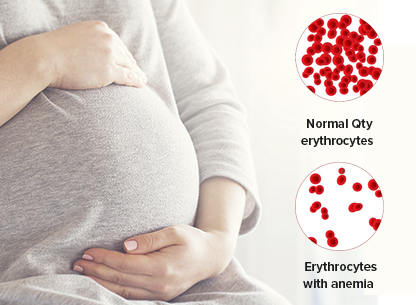
EARLY DETECTION OF RISKS AND TREATMENT OF IDA PROMOTES A NORMAL PROGRESS OF PREGNANCY, CHILDBIRTH AND BIRTH OF A HEALTHY CHILD
© 2026 
